Philosophers Fuel
Brand identity and digital presence for a drone delivery startup.

Overview
Philosopher’s Fuel is a wellness-focused startup creating functional products for modern, mindful lifestyles. Built at the intersection of philosophy and performance, the brand translates big ideas into tangible consumer experiences from packaging to digital platforms helping users fuel their day with purpose.
|
|
|
|
BRIEF
The founders came to me with one ask — build everything from zero. Logo, brand voice, packaging, website, visuals, 3D renders. A complete brand identity for a nootropic supplement that needed to earn trust in a market full of products that didn't deserve it.
PROBLEM
The supplement industry has a trust problem. Loud labels, exaggerated claims, ingredients nobody can pronounce. Most brands look like they're hiding something behind the noise.
Philosopher's Fuel was different in intent — genuinely trying to help people with brain fog and cognitive performance. The design needed to prove that before a single bottle shipped.

Competitor research grid — 6–8 supplement brands showing the visual noise you were designing against
RESEARCH
I conducted interviews with 20 potential customers — students, tech workers, and existing supplement users.
Three things came up in almost every conversation:
Brain fog was universal. Students before exams, developers in late-night sprints — the experience was the same regardless of who I talked to.
They wanted to feel natural, not altered. Nobody wanted intensity. They wanted to feel like the clearest version of themselves.
Trust was the real barrier. The supplement market had burned people. The word that kept coming up was natural — not as a claim, as a feeling.
"I don't trust anything that looks like it's trying too hard to sell me something."
That single insight became the design brief.
Mood board — the visual direction you landed on vs. directions you rejected
BRAND DIRECTION
Dark. Minimal. Quiet confidence. Not trying too hard. Let the product speak.
I explored multiple directions before landing on the final identity. The goal was to feel premium without feeling cold — scientific without feeling synthetic.
Competitor research grid — 6–8 supplement brands showing the visual noise you were designing against
THE LOGO
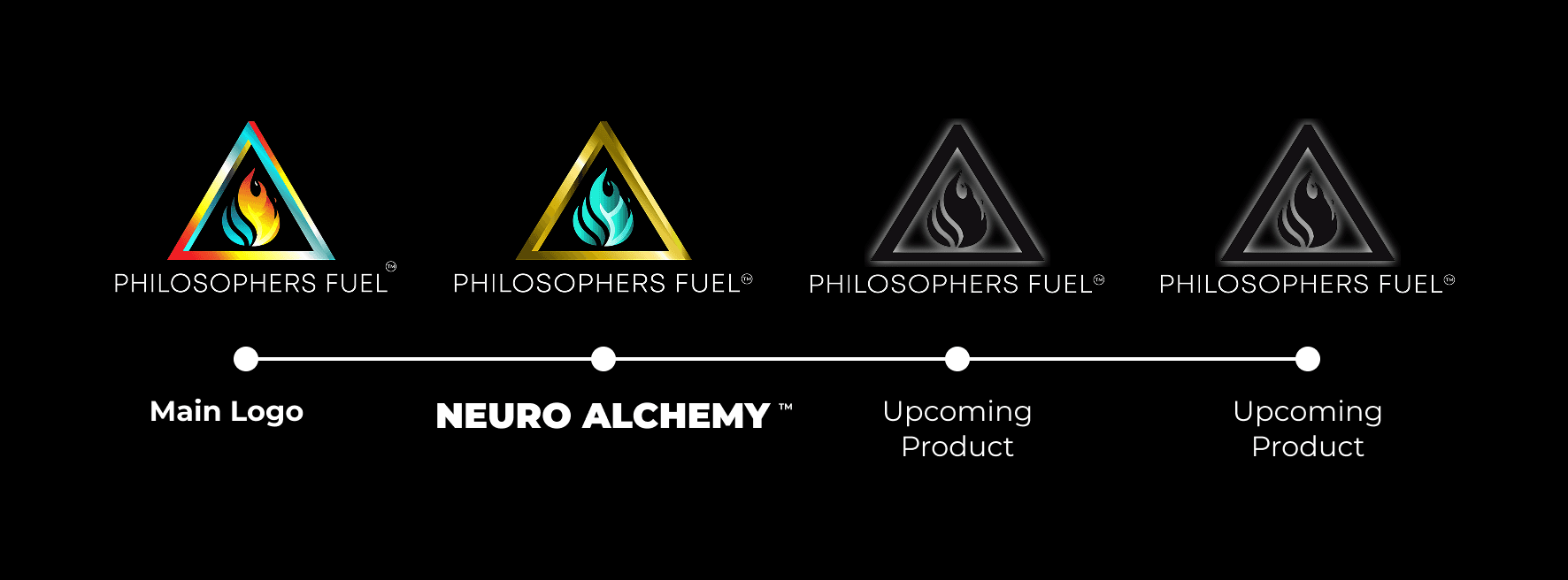
The fire symbol represents the spark of mental clarity. But the decision I'm most proud of is structural — the frame around the symbol is modular. Swap the symbol, keep the frame, and a new product line has its own identity without breaking brand recognition.
The founders immediately saw the business value in that call
Logo variations — 2–3 rejected directions + final, with short annotations on why each was rejected
#1
The Brand System
Every element has a reason behind it.
Color — dark palette signals premium, creates contrast that makes the product pop in both digital and print Typography — nothing decorative, nothing that competes with the product itself Gold accents — used sparingly, only where they add tactile perception of quality
Brand guidelines sheet — color palette, typography, iconography, logo lockup
#2
This is where the project got technically ambitious. I could have used stock mockup templates. I didn't.
I learned Blender to model the bottle from scratch — because a generic mockup on a premium brand immediately breaks the illusion. The physical product needed to feel real before it existed.
The label went through several passes. I kept stripping things back. If it didn't need to be there, it wasn't. The raised logo emboss and gold foil print were decisions made specifically to give the digital renders a tactile quality — when someone sees it on screen they should almost feel the texture.
grey wireframe mesh transitioning into the final render, 5–10 seconds 📷 PLACE HERE: Flat label design — final Illustrator artwork 📷 PLACE HERE: 3D renders — multiple angles of the final bottle
#4
Website
The first version of the site had been built mostly with AI tools. It looked generic and didn't match the brand standard we had built for the physical product. I redesigned it in Framer.
The 3D problem. First instinct was to embed the actual 3D model into the hero. It looked incredible. In practice it made the site slow and buggy on most devices — and a buggy hero on a brand trying to build trust is worse than no 3D at all.
I made the call to switch to high-fidelity 2D renders.
The layout problem. The original hero was horizontal. On most screen sizes the bottle was cut off or pushed below the fold. I redesigned it into a vertical layout — the bottle became the undeniable focal point the moment the page loads.
The reference I kept coming back to was Apple. Not copying it — borrowing the principle. Let the product be the hero. Remove everything that competes with it.
📷 PLACE HERE: Before/after — horizontal buggy version on the left annotated with problems, clean vertical final on the right 📷 PLACE HERE: Final website screens — hero, product page, any other key screens
#5
What I Learned
Performance is part of the design. The 3D model decision taught me that beautiful and functional aren't always the same thing. The right call wasn't the most impressive-looking one.
Design can do real business work. The brand system and renders fed directly into the investor deck. The founders closed $100K in seed funding. That wasn't a side effect of the design — it was part of the outcome.
Modularity is a gift to future you. Building the logo to be interchangeable wasn't extra work — it was the kind of decision that makes a brand last.
Details are trust signals. Every time I considered removing the gold foil or simplifying the emboss I came back to the interviews. People don't consciously notice these details — they just feel like the product is worth trusting. That's the job.
#6
Conclusion
A brand that went from a founders' idea to a funded launch-ready product. 20% above industry benchmarks for e-commerce conversion. Packaging production-ready. Design system built to scale.
Final hero shot — your best render or website screenshot, full width
/next projects