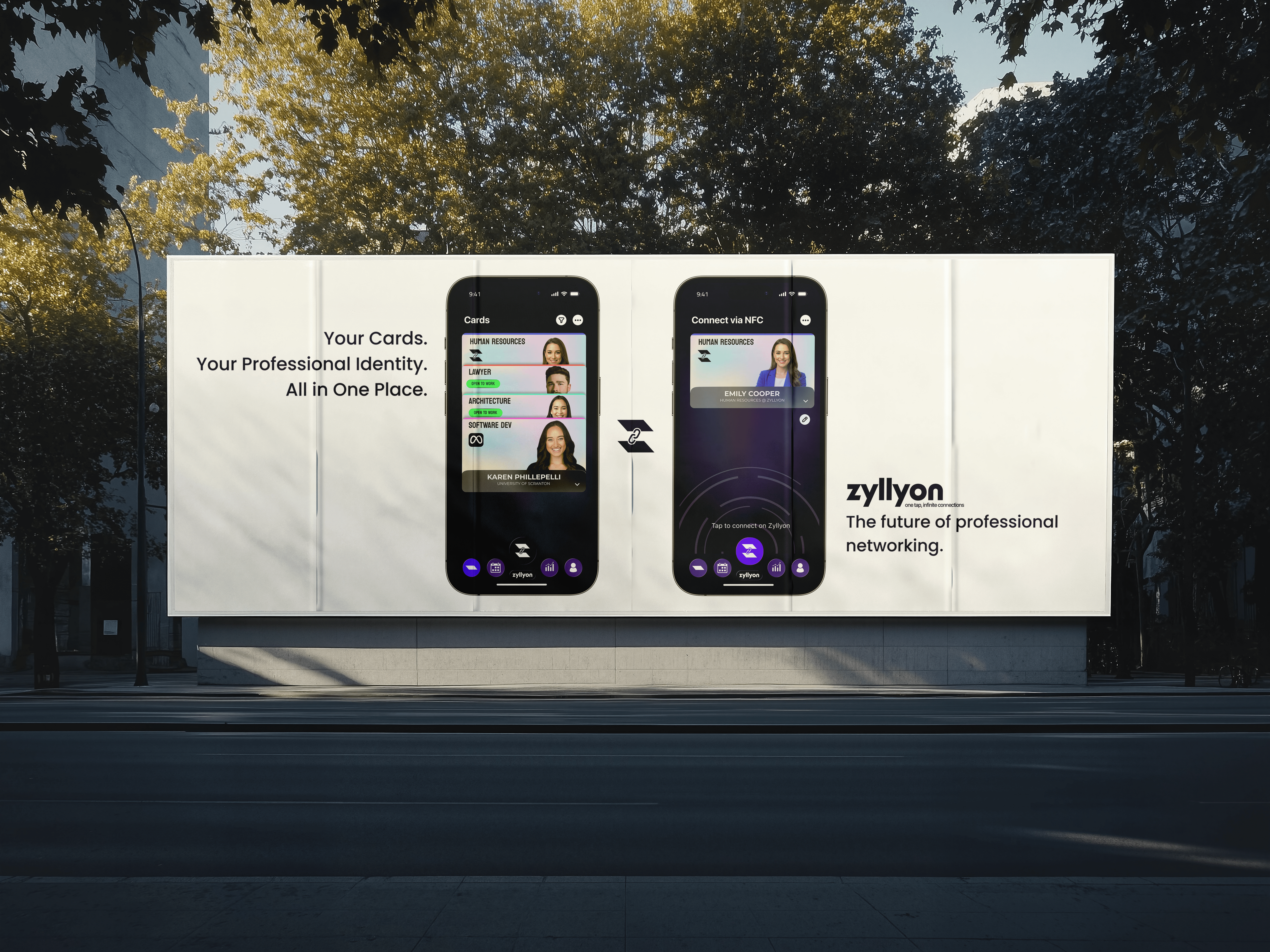
Zyllyon
A networking platform that changes the way you remember people.
Personal Project

Overview
Zyllyon is a professional networking app for people who've been ignored on LinkedIn one too many times. I came up with the idea because I felt the problem personally and built the whole thing to prove it could be solved differently.
|
|
THE PROBLEM
Professional networking tools are built for people who already have networks. Zyllyon is built for everyone else.
THE IDEA
I came up with the concept for Zyllyon because I felt the problem personally. LinkedIn is built around job hunting, your profile is a resume, your feed is announcements, and every interaction feels transactional. For students and recent grads trying to build real professional relationships, it falls flat. Nobody wants to feel like a cold email.
Zyllyon is a professional networking app designed for students and recent grads who want to build genuine connections — not just collect contacts or chase recruiters.
THE RESEARCH
Before designing anything, I ran surveys with students and recent graduates to validate whether this was actually a shared frustration or just my own.
The findings were clear. Most respondents said LinkedIn felt impersonal and transactional. They used it because they felt they had to, not because they got value from it. The relationships they actually valued professionally came from in-person events, mutual introductions, or communities not cold connection requests.
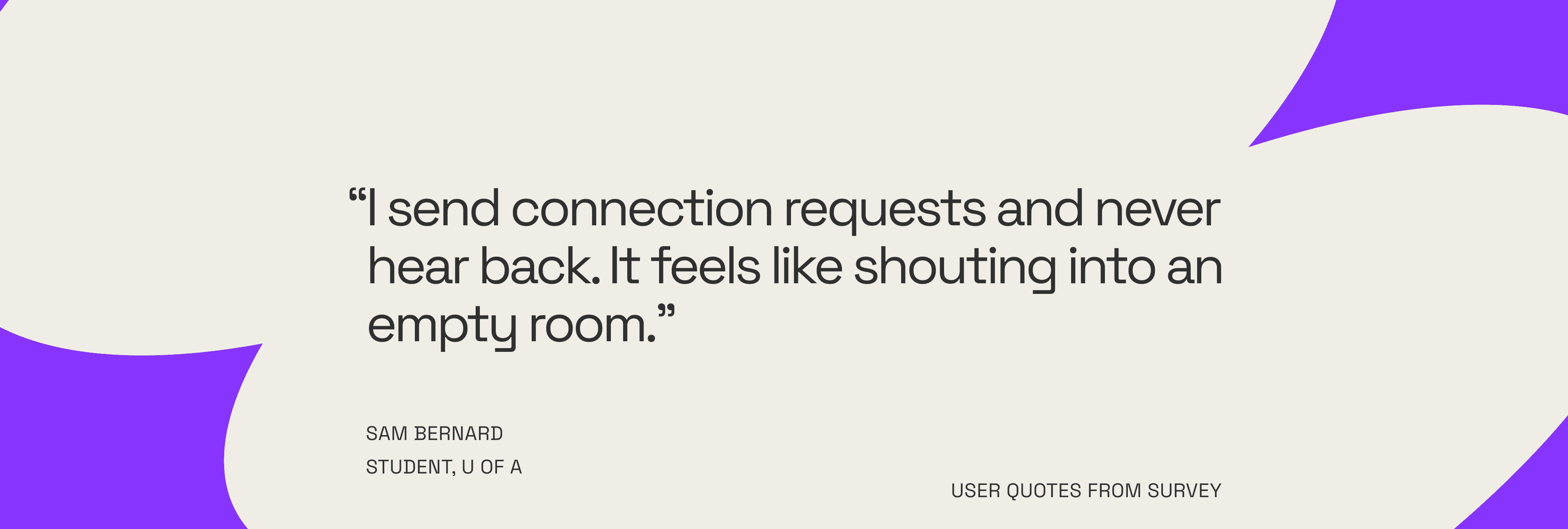
User Quotes
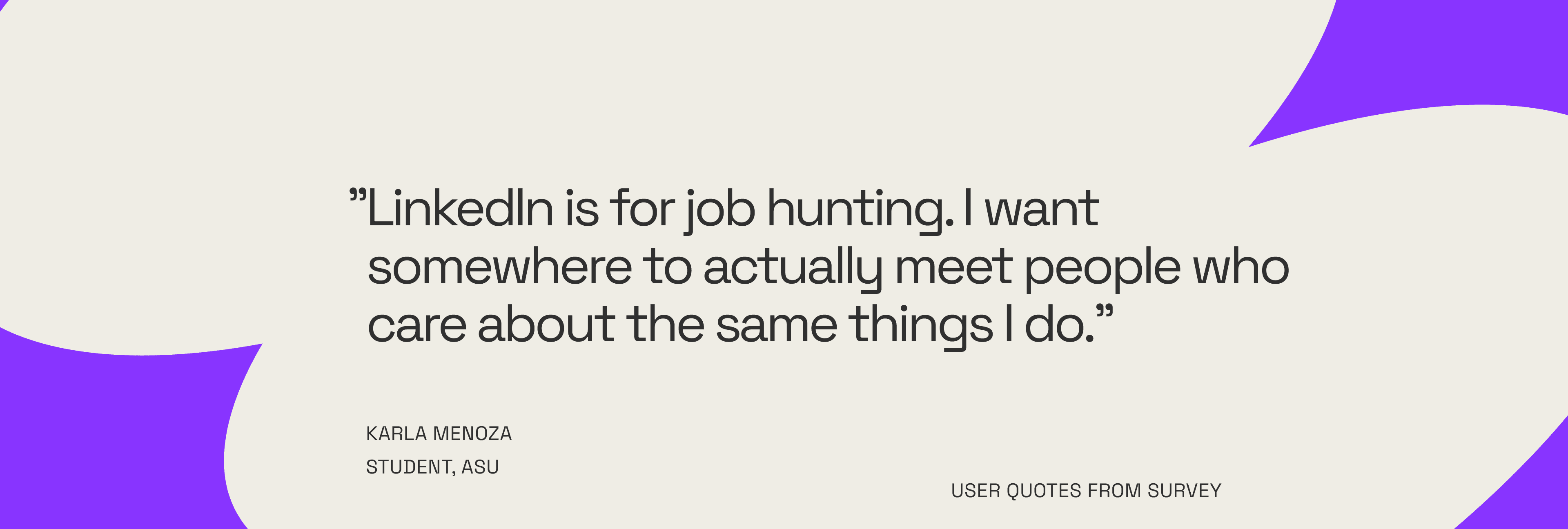
User Quotes
DESIGN DECISIONS
Every decision at Zyllyon started with a question, not an answer. Here are the three that shaped the experience most.
The Navigation
Most networking apps give you the same navbar Home, Notifications, Profile, Analytics. Standard icons, standard order, standard everything. I'd seen it a hundred times and I knew our users had too.
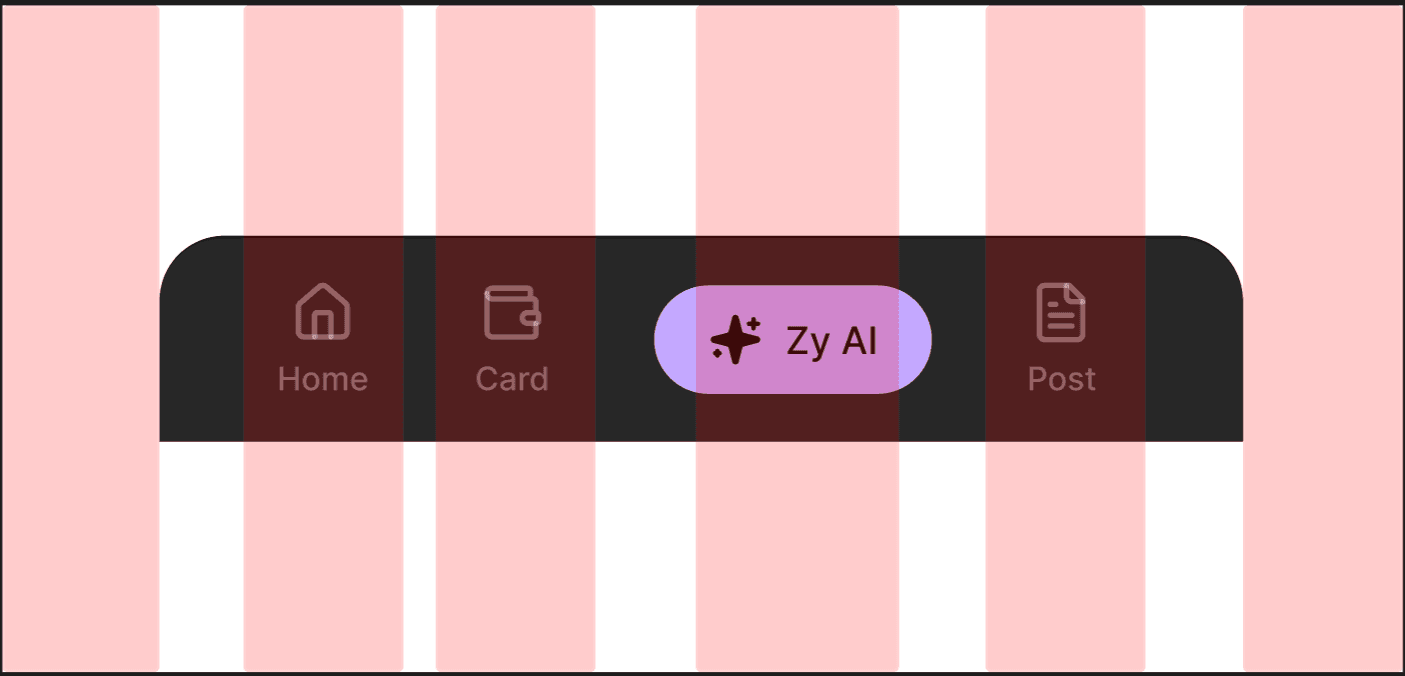
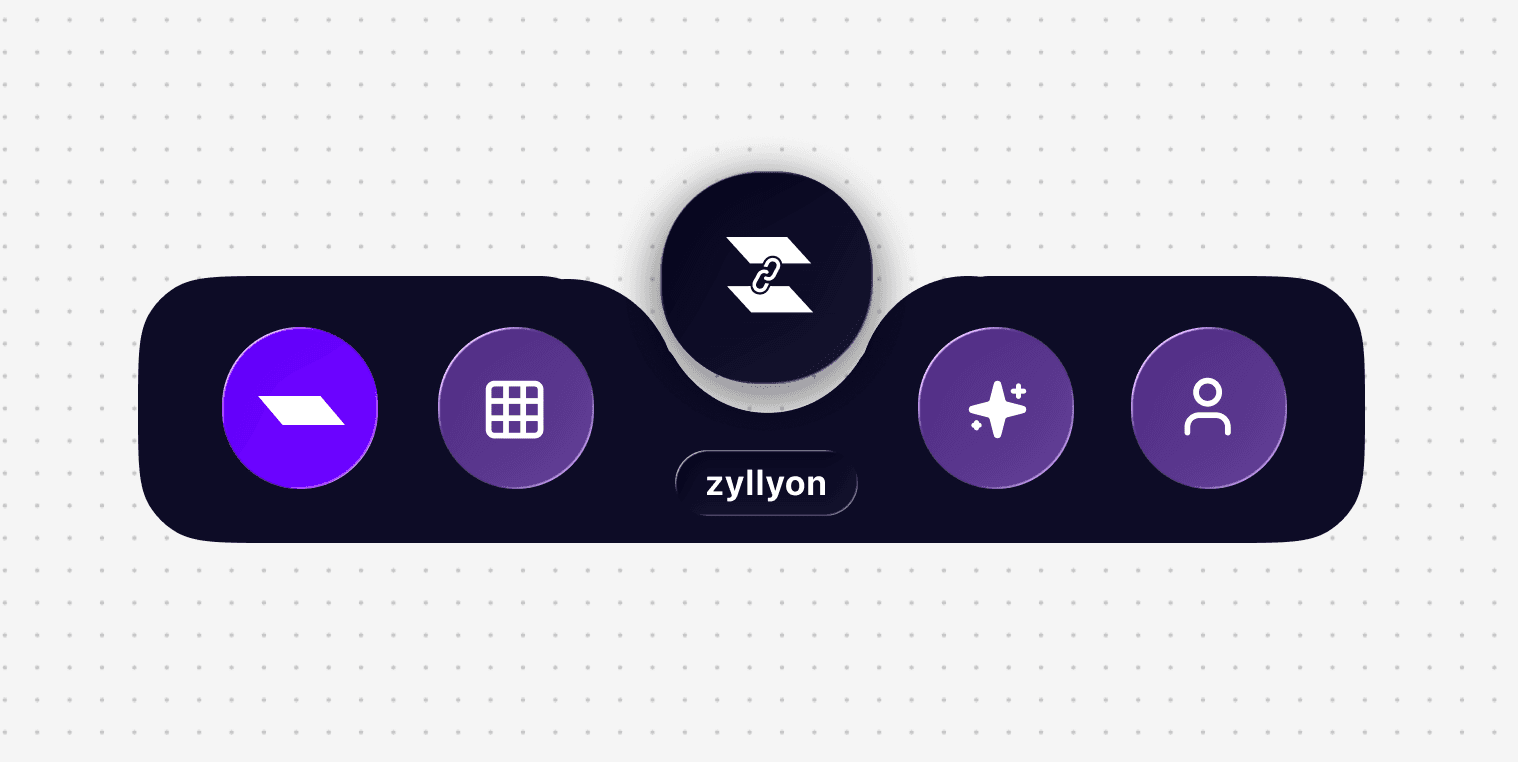
I wanted to do something different. Not different for the sake of it different because the standard navbar was designed for apps that already have your attention. Zyllyon needed to earn it.
So I redesigned it from the ground up with three principles driving every decision:
Contrast and clarity. The active state uses high contrast so users always know exactly where they are in the app without having to think about it.
Order based on mental model, not convention. I mapped the order of tabs to how a new user actually thinks about the app what do they do first, second, third not to what every other app does.
I tested it with 6 users before finalizing. They didn't just tolerate it they noticed it. Several commented that it felt cleaner and easier to navigate than apps they use daily. That feedback locked in the direction.
The original version looked like every other navbar. The final version looks like Zyllyon.
The Onboarding Flow
The highest-risk moment in any app is the first 60 seconds. Get it wrong and users leave before they've seen what the product can do.
Early versions of the onboarding were too heavy, name, title, industry, experience, all upfront. It felt like filling out a job application. Which is exactly what we were trying not to be.
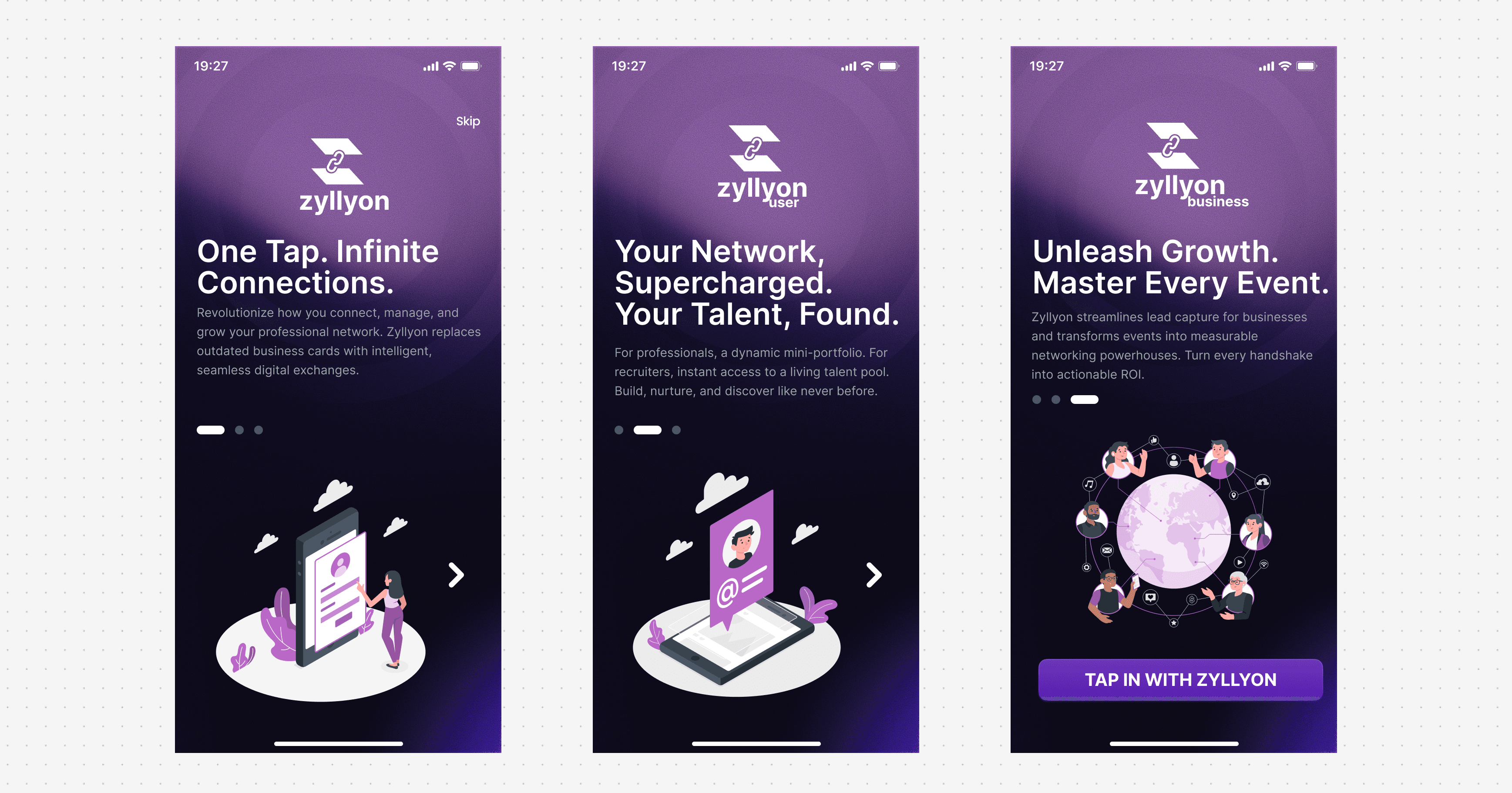
I stripped it back to three questions in sequence: who you are, what you're interested in, and who you want to meet. That shift changes the mental model from "building a profile" to "telling your story." Small difference in framing, massive difference in how the experience feels.
The Card Experience
Most networking apps take you to a profile page when you tap someone. A page feels like a form. It feels like LinkedIn. I didn't want that.
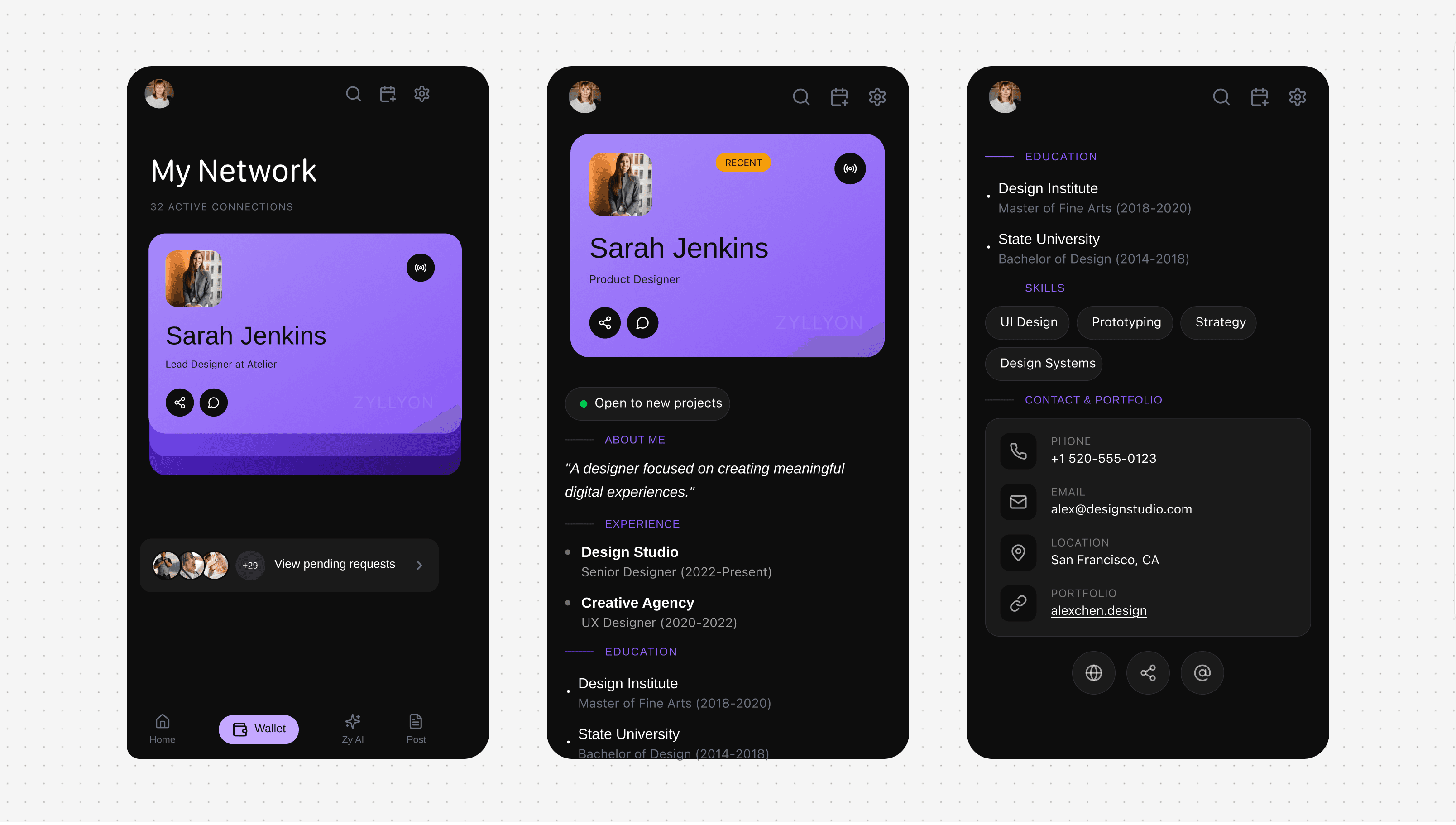
I wanted something that felt closer to what Apple does with Wallet each card is a complete, self-contained identity. Everything you need in one glance. Premium, tactile, personal. You don't open a page to see your boarding pass. You just pull out the card.
That's the mental model behind Zyllyon's card experience. Every person on the platform has a card a ready portfolio you carry with you. Tap someone and their card surfaces immediately. Who they are, what they do, what they care about, all in one clean view. No scrolling through a resume. No digging through tabs.
The early direction was a standard profile page header image, bio, experience listed below. It worked but it felt exactly like every other app. The moment we switched to the card format everything changed. The interaction felt intentional. The information felt curated rather than dumped. And crucially it felt like something worth having something you'd actually want to share.
The card is also personal in a way a profile page isn't. It's yours. It represents you the way a business card does except it's alive, it updates, and it carries your whole story in your pocket.
USER PERSONAS
I conducted interviews with two users and created an empathy map for each. Both users shared similar pain points they found traditional networking platforms like LinkedIn made them feel invisible, with messages going unanswered and profiles that looked thin compared to experienced professionals. Hence the goal of the first persona "Alex Chen" is to make genuine human connections that open doors, without networking feeling forced or transactional.
My second user had hit a ceiling at her current company and wanted to expand beyond her existing network intentionally not just collect contacts, but find real collaborators working on ambitious things. Using her empathy map, I created the second user persona "Maya Creed." The goal of Maya is to break into new professional circles, find collaborators working on ambitious projects, and build meaningful relationships with people ahead of her in her career.
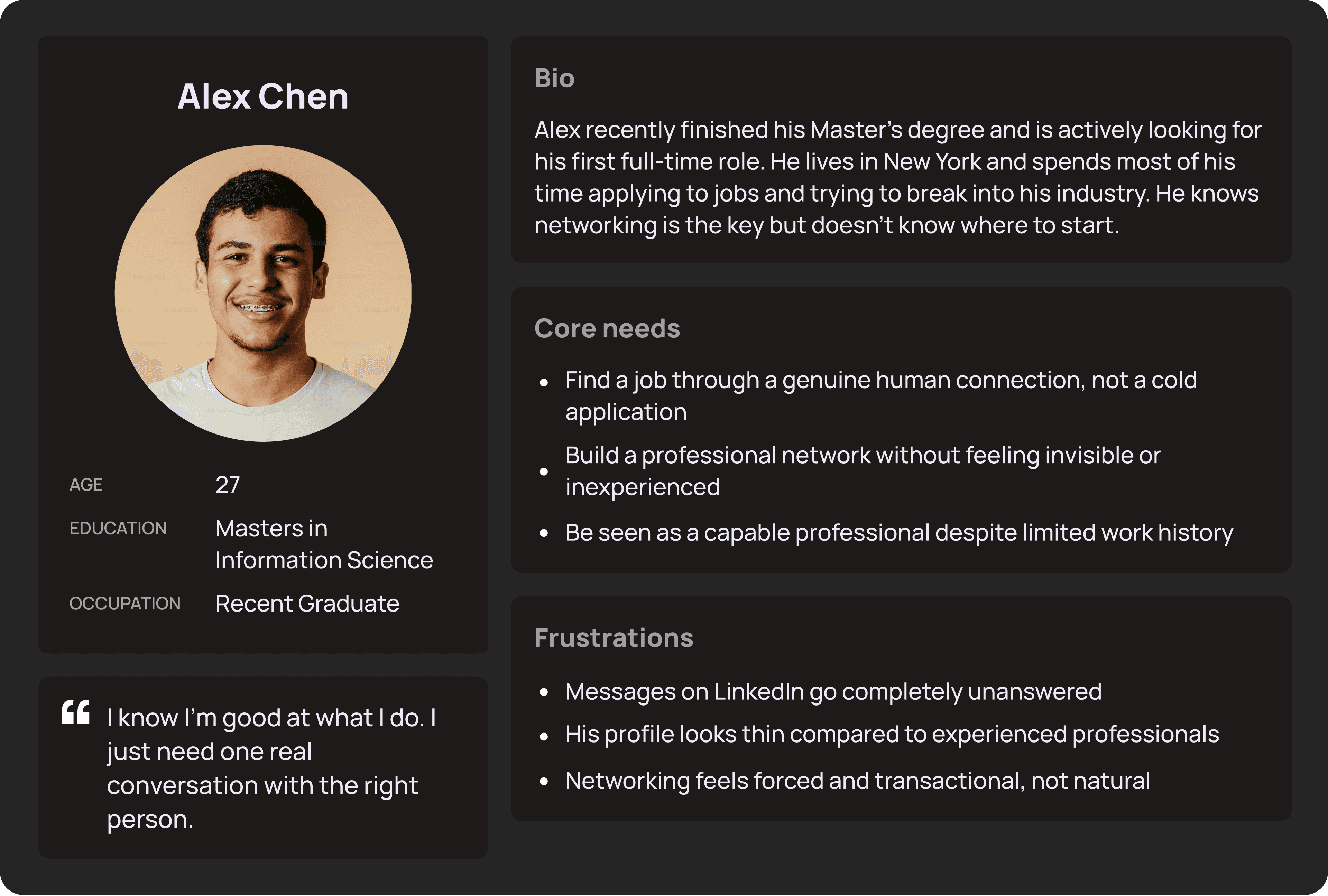
User Persona 1
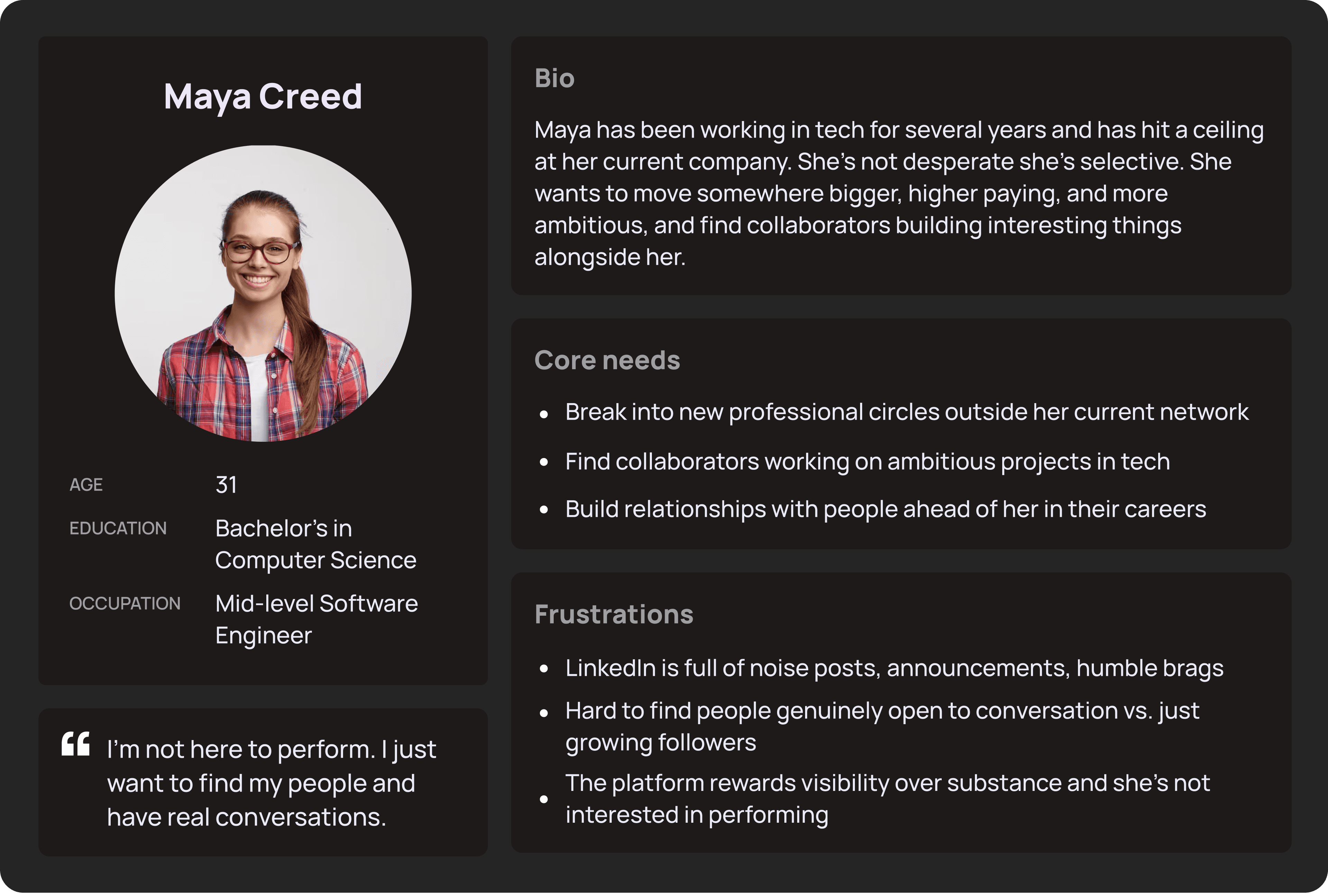
User Persona 2
Competitor Audit and Analysis
I evaluated LinkedIn as my direct competitor and three indirect competitors for the competitive audit. Across all four apps I analyzed four key metrics onboarding experience, connection model, target user, and friction.
The majority of applications I found were built for broad enterprise audiences with high-friction onboarding and symmetrical connection models that create noise rather than value. None of them offered both intentional in-person contact exchange and AI-powered relationship intelligence in a single seamless experience.
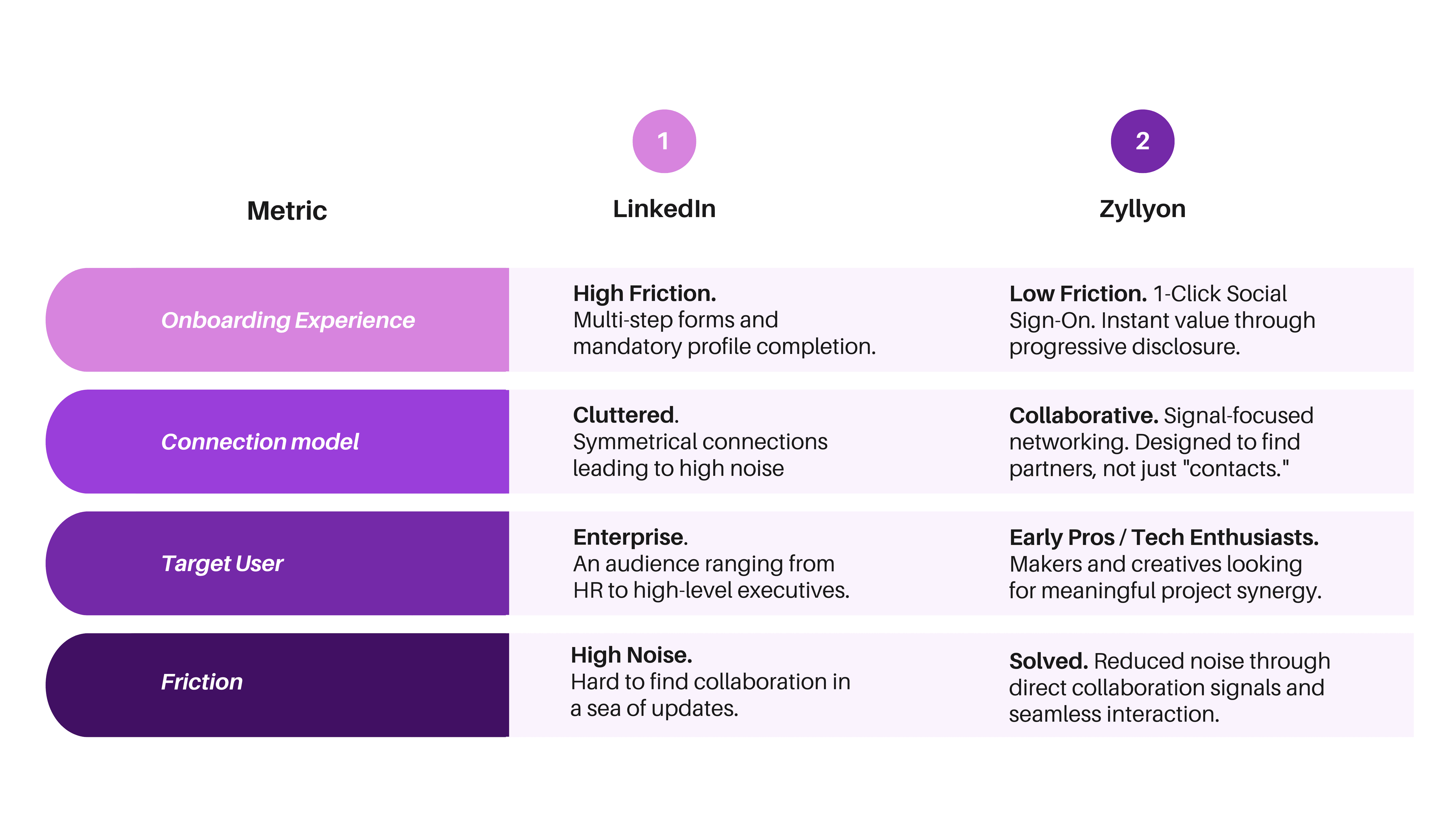
Competitor analysis
How Might We Exercise
The aim was to generate lots of ideas even if some of them sounded weird at first! After analyzing the gaps in competitors' applications and deriving opportunities for Zyllyon, I started ideating through various techniques like HMW, Crazy 8 and simple pen and paper!
Some of the HMW I came up with are:
Amp up the good: HMW help users stay consistently connected with the people they meet at events?
Explore the opposite: HMW create a way to make networking feel less transactional and more human?
Go after adjectives: HMW make it effortless for users to remember context about every connection?
Create an analogy from need or context: HMW make exchanging professional contacts as easy as sharing a photo?
Play POV against the challenge: HMW prevent valuable connections from going cold after the first meeting?
Change the status quo: HMW eliminate the need for business cards entirely at professional events?
Core Functionalities
To derive core functionalities of my solution, I built 2 goal statements for both of my personas. The goal statements helped me describe my product and its benefits for my targeted user group.
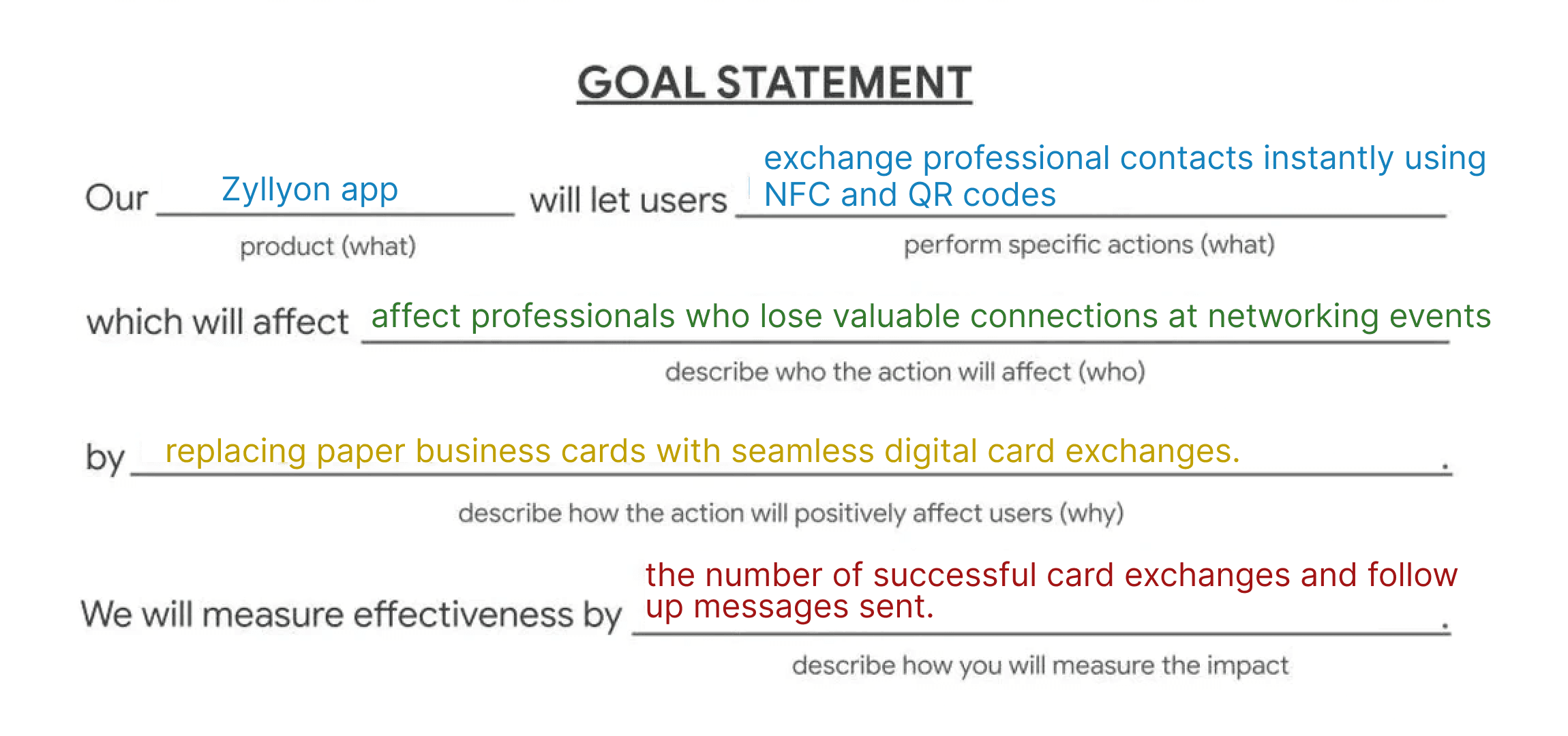
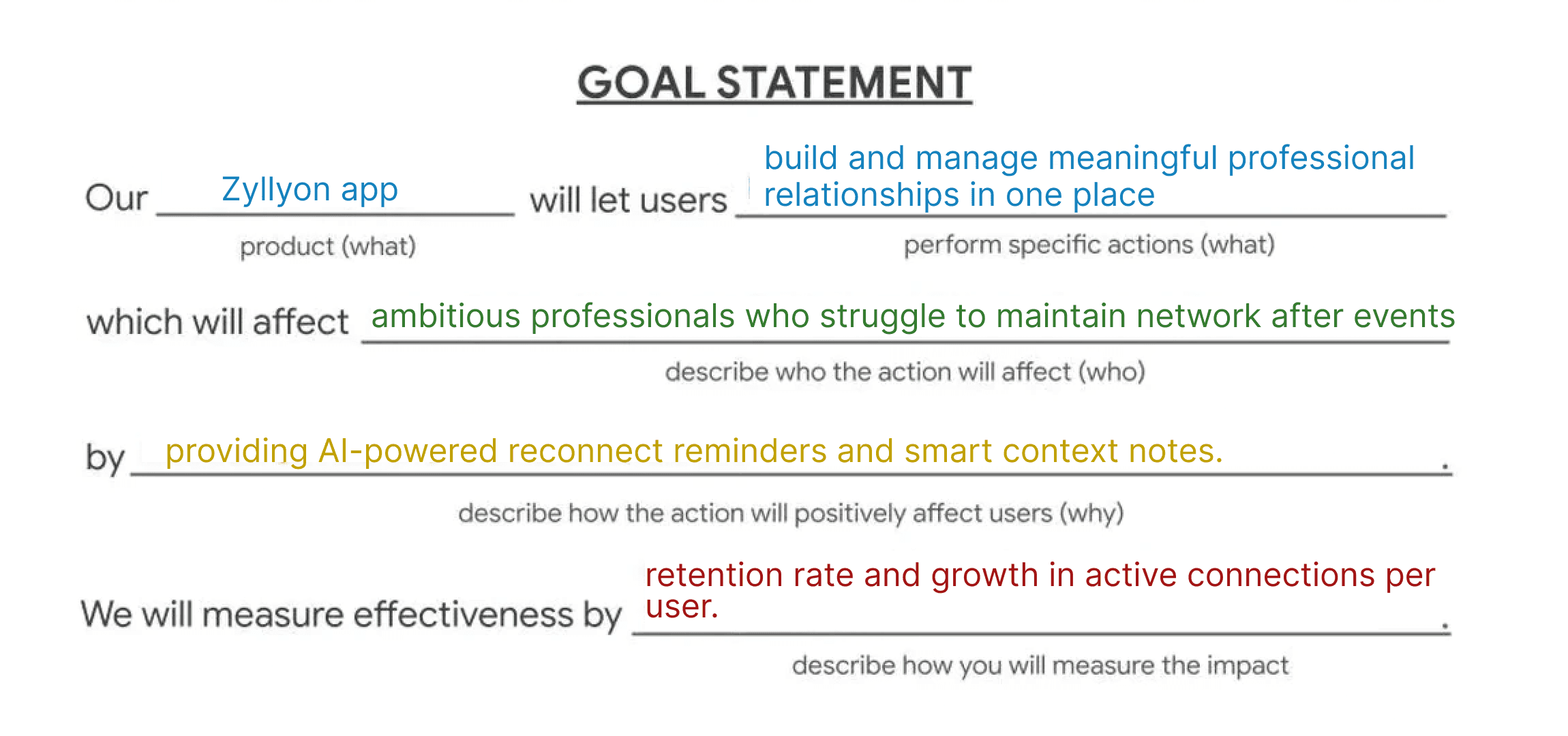
2 goal statements for both of my personas
#1
This was my primary ownership on the project. The login and onboarding flow is the first thing every user experiences and based on the research, it was the highest-risk moment. Get it wrong and users leave before seeing what the app can do.
The design challenge was specific: how do you make someone feel welcomed into a professional space without making them feel like they're filling out a job application?
I went through several directions. Early versions were too form-heavy — name, title, industry, experience. It felt like LinkedIn all over again. I stripped it back significantly. The onboarding needed to establish context and personality, not just collect data.
The final flow focuses on three things in sequence who you are, what you're interested in, and who you want to meet. That framing shifts the mental model from "building a profile" to "telling your story." It's a subtle difference that changes how the whole app feels from the first screen.
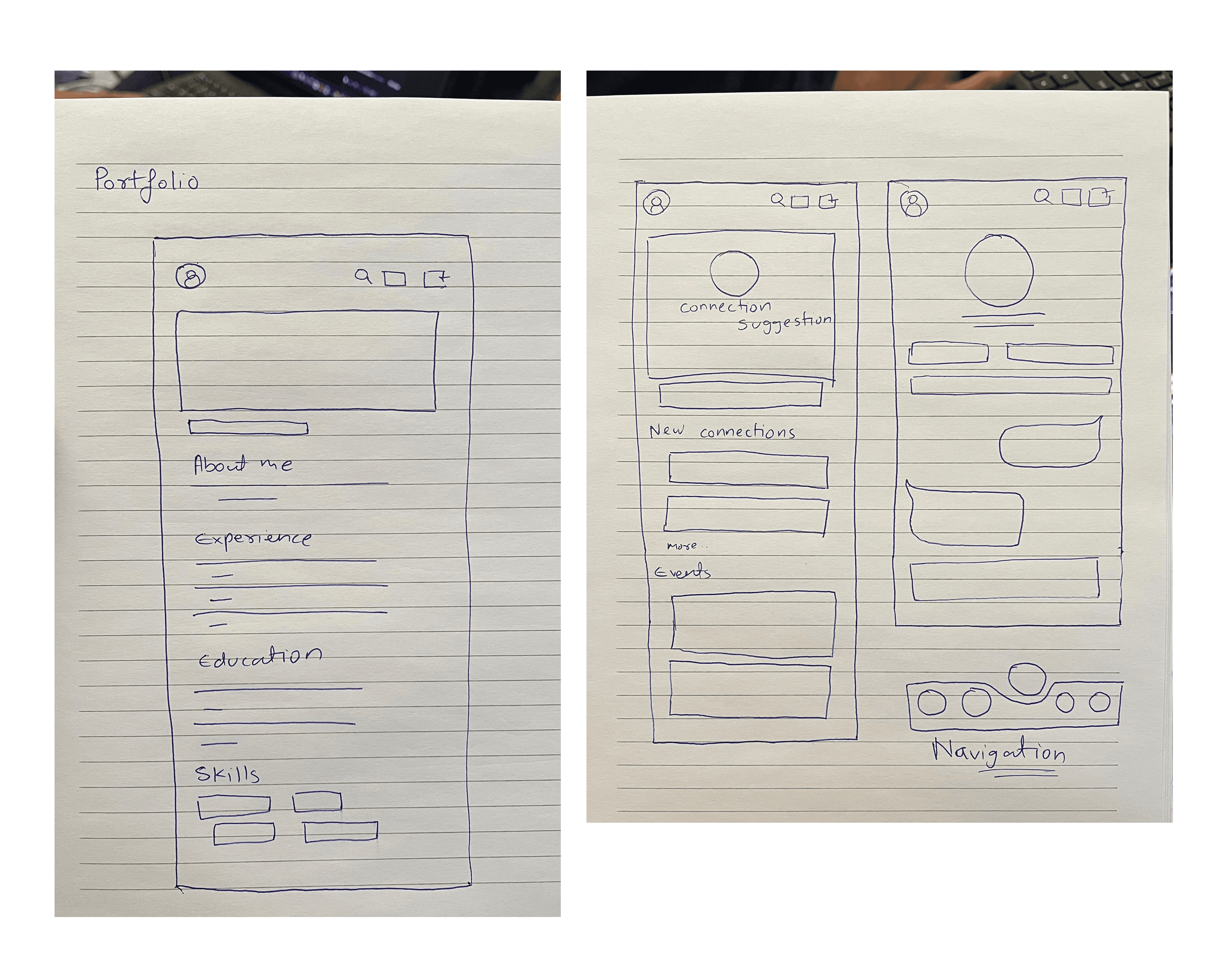
Rough sketches of the early ideas
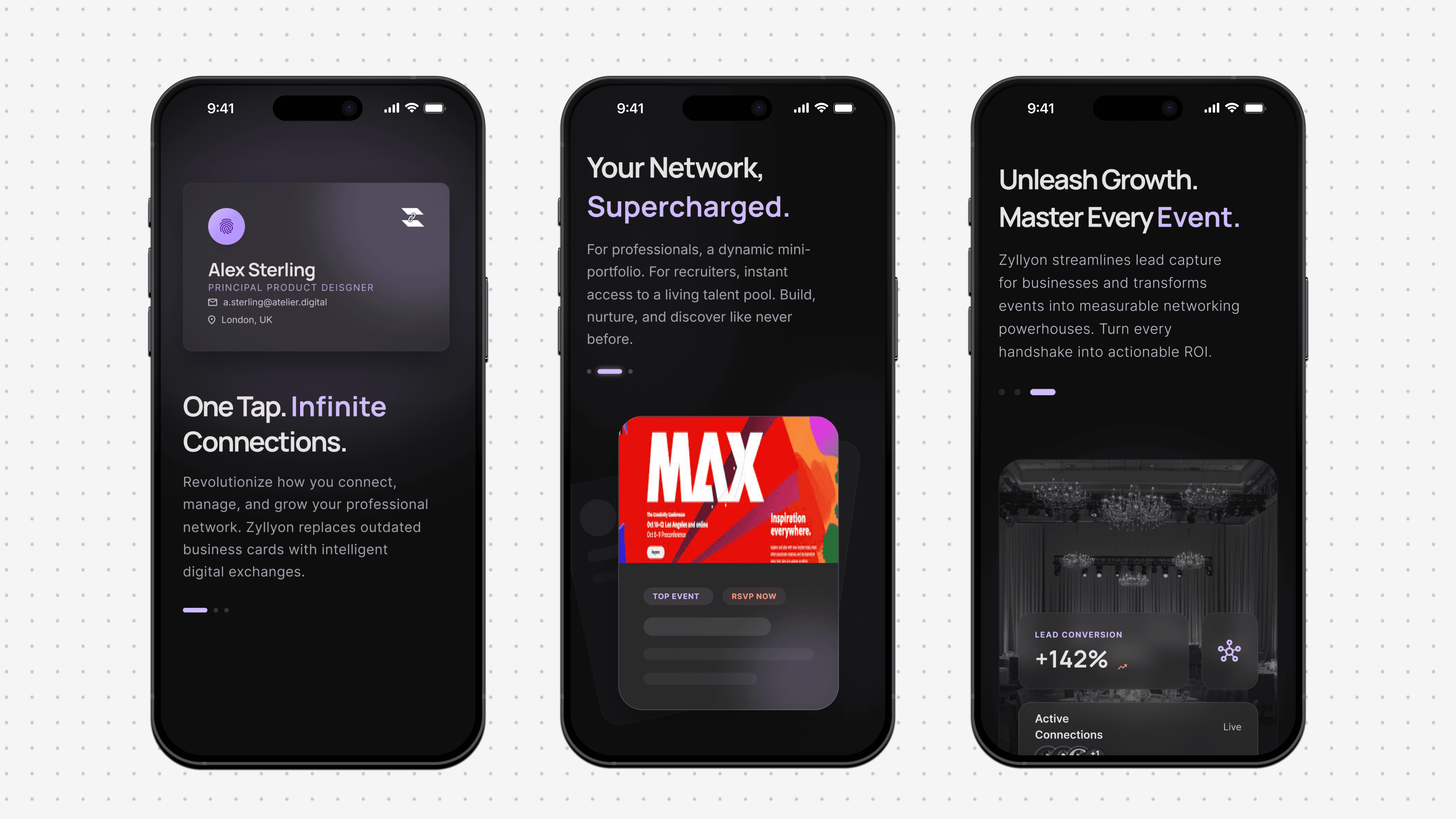
Final onboarding screens
#2
BRAND
The Zyllyon identity needed to feel modern and approachable without tipping into casual. Professional but not corporate. Warm but not unprofessional.
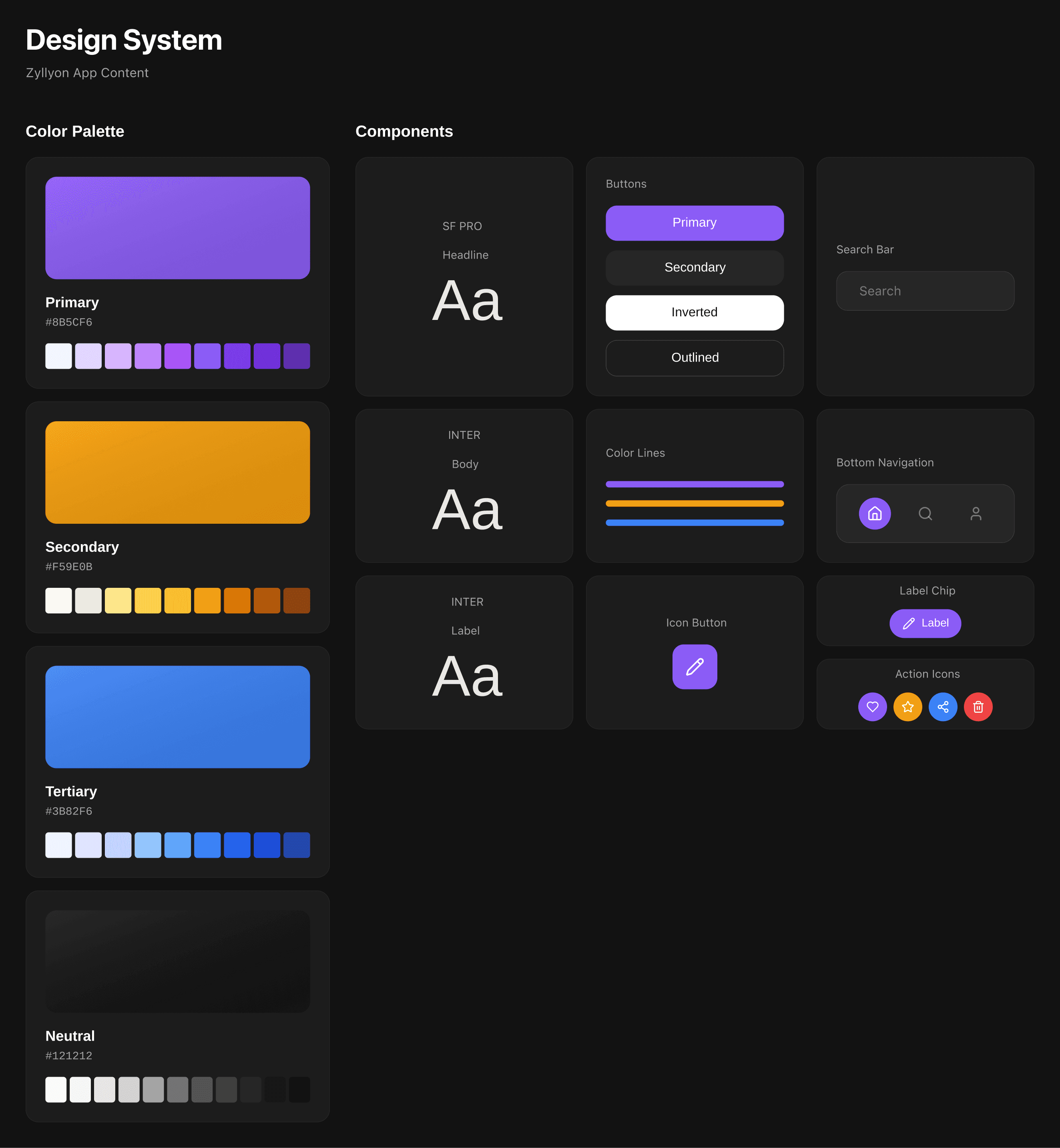
The visual language stays clean and contemporary something a 22-year-old would feel comfortable putting on their phone alongside their other apps, but that still signals credibility to a recruiter or professional they're trying to connect with.
#3
BUILDING THE APP
Every design decision at Zyllyon started with a question, not an answer.
Before committing to any direction, Mrunali and I mapped out our options, pressure-tested the tradeoffs, and let research guide the final call. These three decisions shaped the core experience of the app
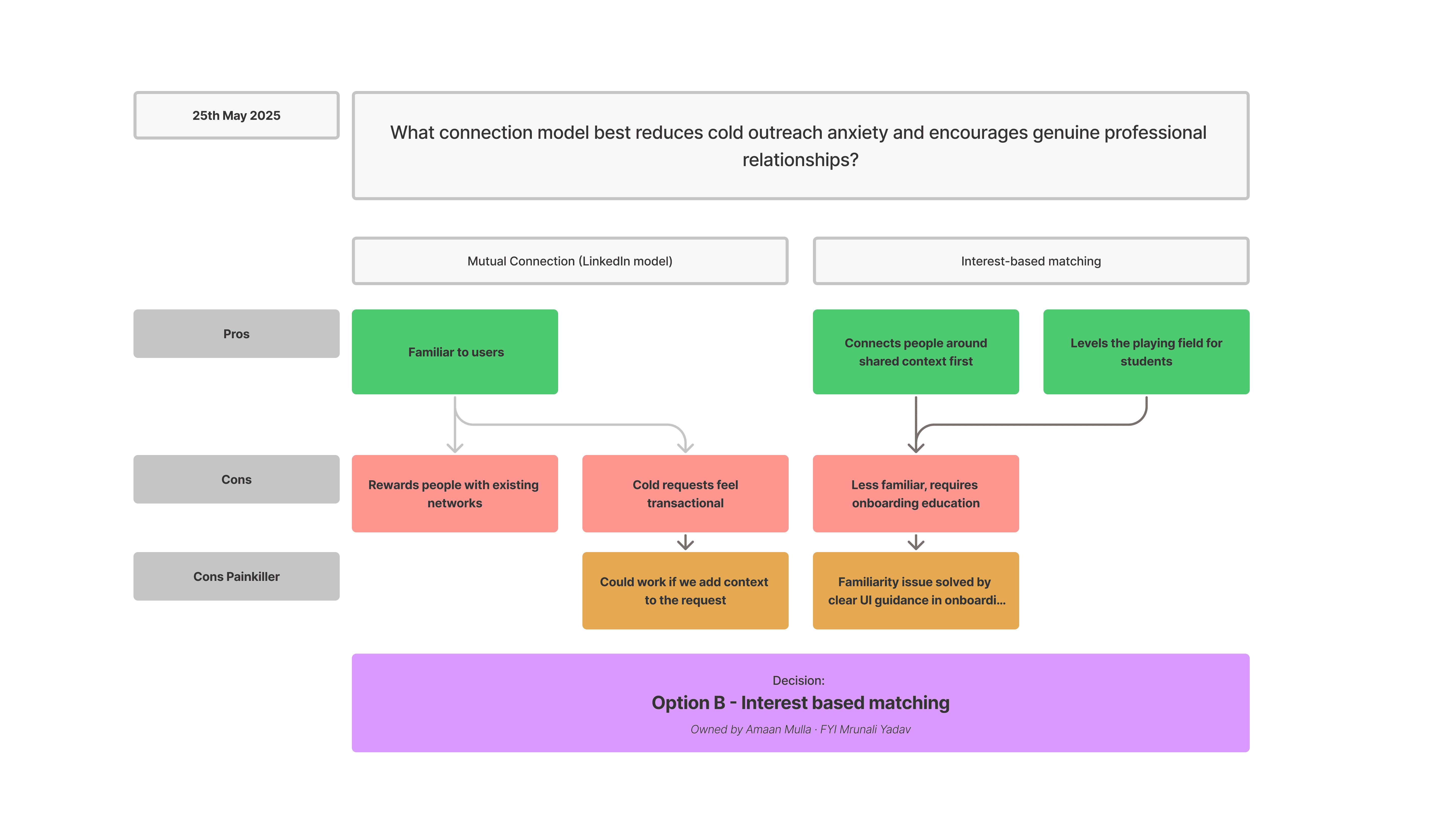
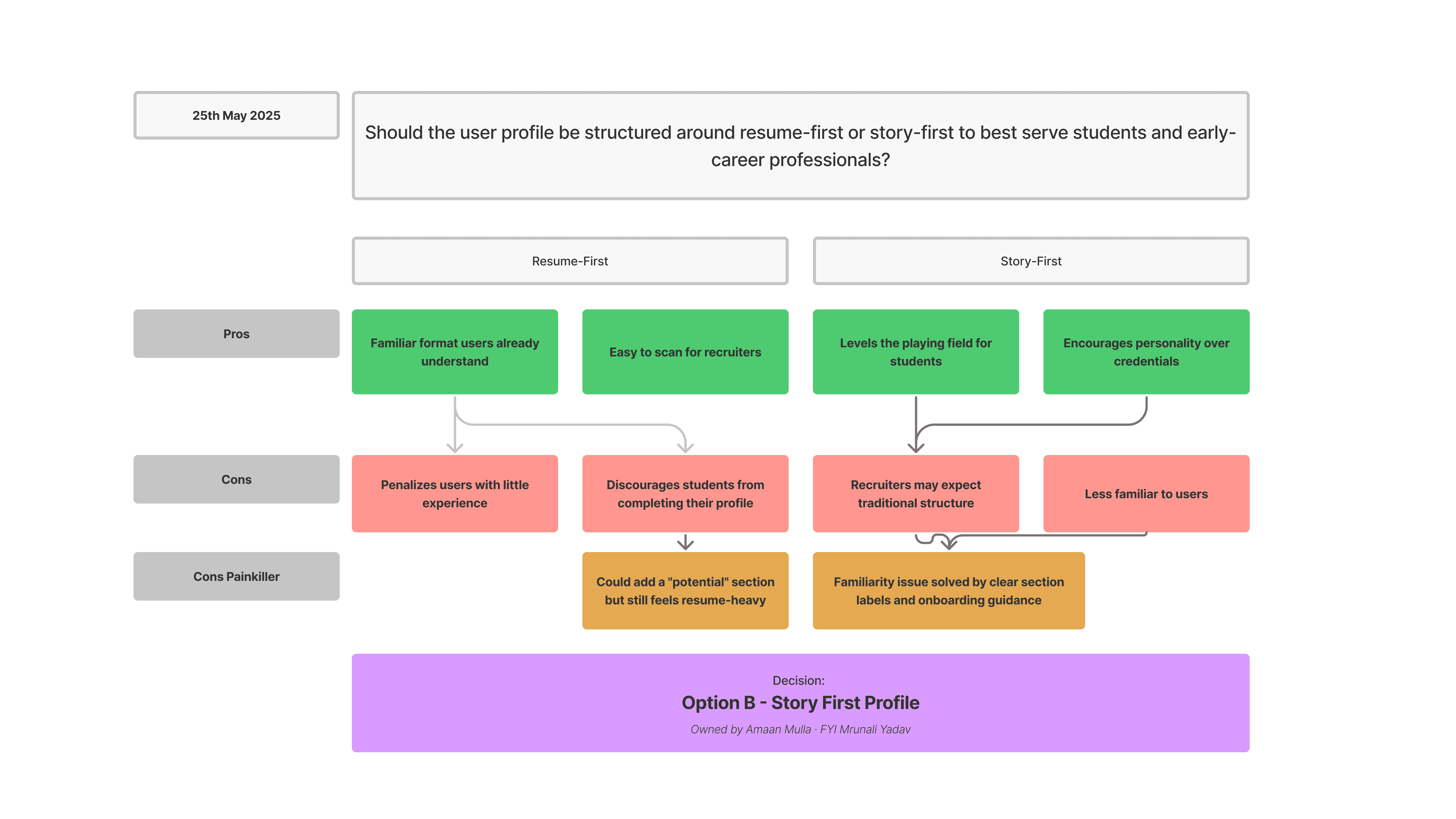
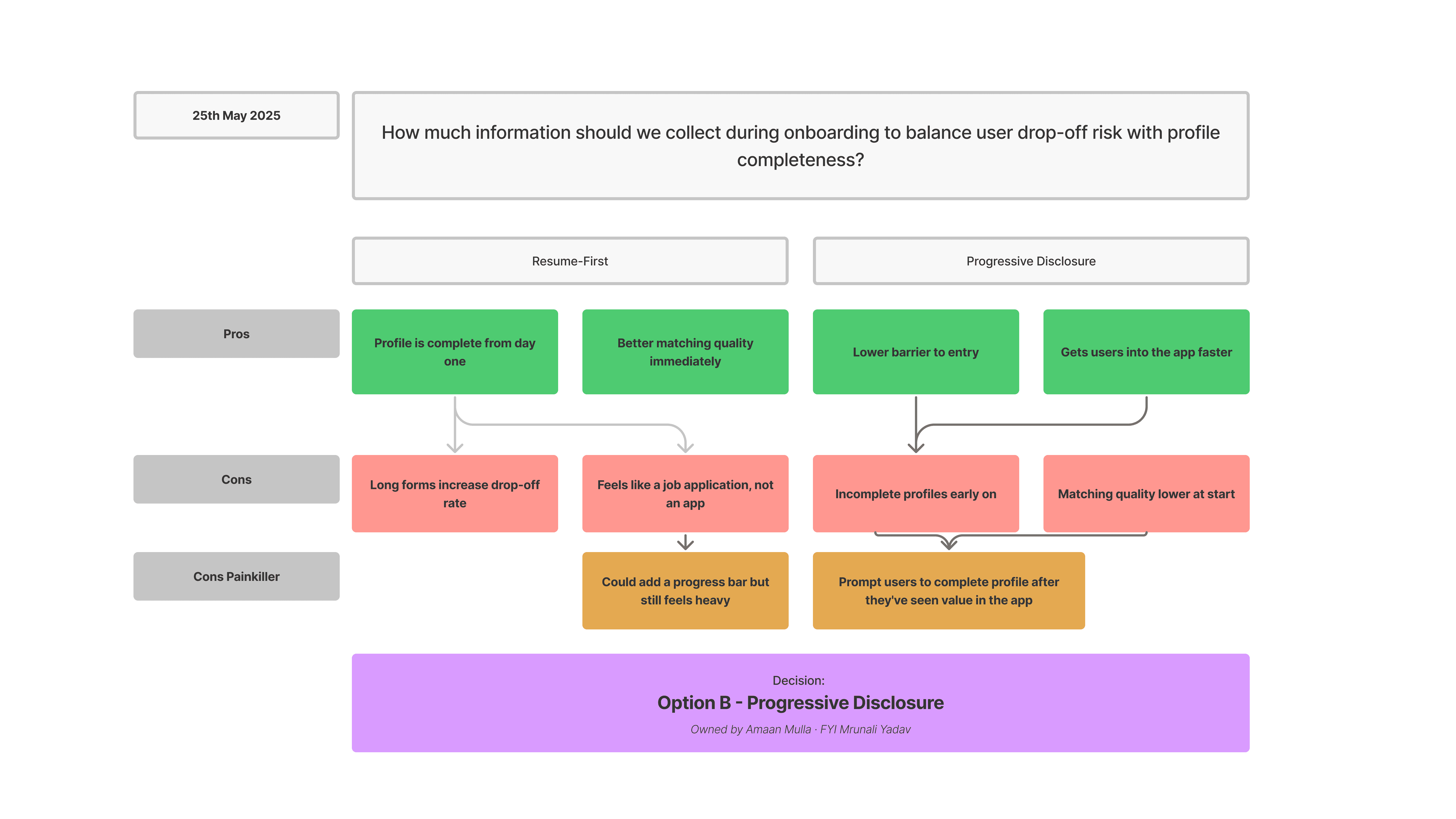
What makes this project different from most portfolio work is that we actually building it. Using Cursor and Claude, we're moving the designs from Figma into a functioning product. I'm involved in the frontend decisions, understanding how my design choices translate into real code, where constraints push back, and where the build process reveals UX problems that Figma couldn't
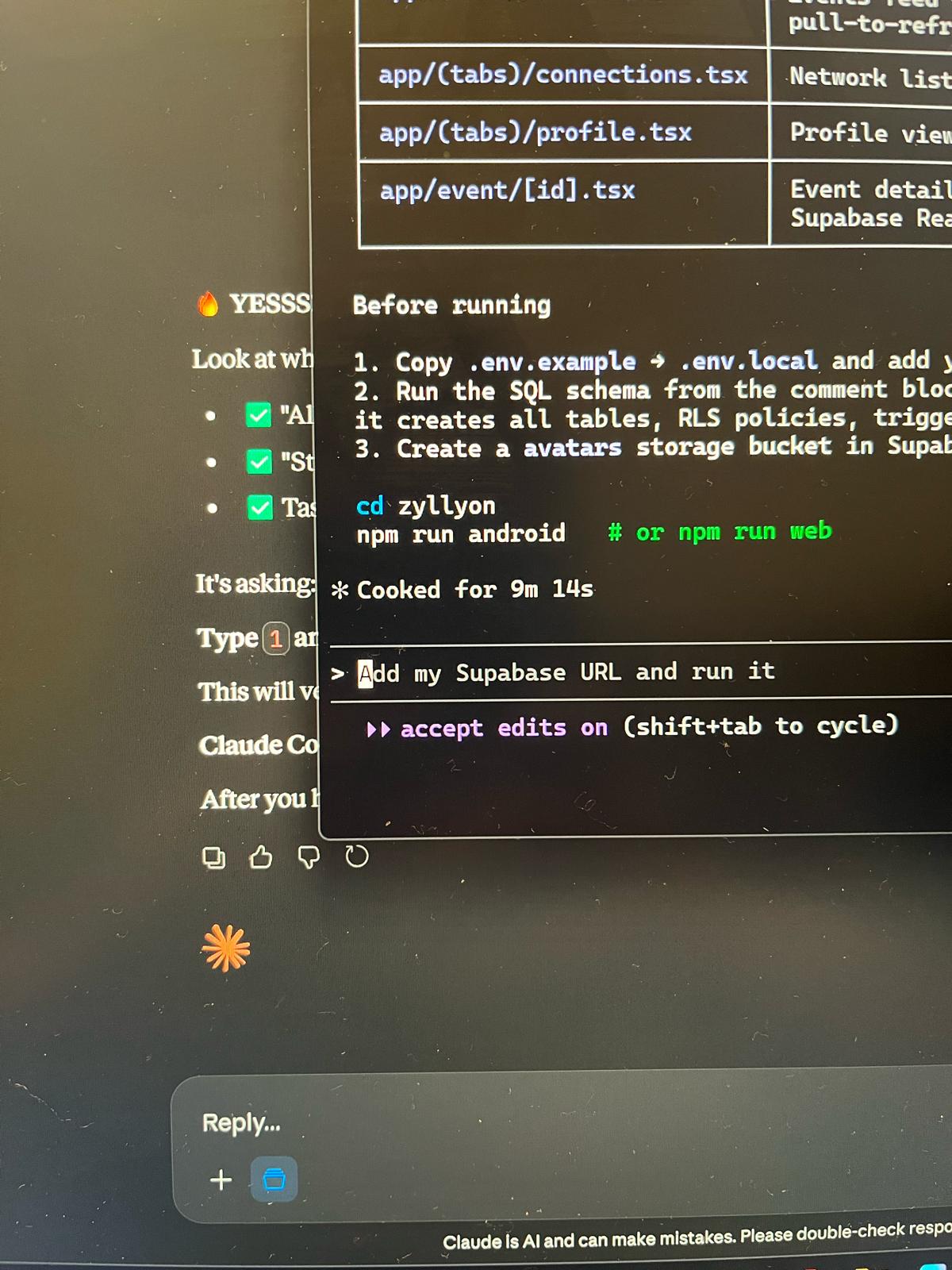
That experience has changed how I design. Knowing that I'll eventually have to build what I draw makes every decision more deliberate.
#4
COLLABORATION
How We Worked Together
Zyllyon was a genuine two-person collaboration from day one. The login and onboarding flow the heart of the product was designed together. Not divided, not handed off. We sat in the same sessions, challenged each other's decisions, and built it jointly.
Beyond the onboarding, we divided ownership clearly. I led the overall app flows, connection model, home screen, network screen, and card experience. Mrunali led the user research, brand identity, and product strategy. But the big decisions visual language, information architecture, connection model were always made together.
The hardest part of designing with one other person isn't the design. It's knowing when to push your perspective and when to let theirs win. Early on we disagreed on onboarding length I wanted shorter, Mrunali wanted more context upfront. We tested both and let the research decide. That process bringing evidence to a disagreement instead of opinion is something I want to carry into every team I work on.
#5
WHY THIS MATTERS
Zyllyon isn't finished. But the problems it's solving are real, the research is real, and the product is being built. What this project taught me is that the best design work happens when you stay close to the people you're designing for, make decisions transparently, and ship something even when it's not perfect yet. Those are the principles I bring to every project and the ones I'm looking for in the team I join next.
#6
WHAT I LEARNED
Starting from your own frustration is valid. The best product ideas come from problems you've lived. Zyllyon exists because I felt the gap personally and the research confirmed it wasn't just me.
Onboarding is the whole product in miniature. If the first flow doesn't feel right, nothing downstream matters. The investment I put into getting those screens right shaped the entire app's personality.
Designing and building are the same skill, learned separately. Moving between Figma and Cursor has made me a better designer and given me a real appreciation for engineering constraints. That gap between design and development is where most products lose quality — being on both sides of it is something I want to keep doing.
Collaboration on a two-person team is its own discipline. Mrunali and I had to be clear about ownership without being territorial. Knowing what's mine, what's hers, and what we decide together made us move faster than either of us would have alone.
#7
WHERE IT'S GOING
Zyllyon is still being built. The research is done, the onboarding flow is designed and prototyped, and the development is underway. This is a live project, which means the case study will keep growing as the product does.